
Precious — pdfkit Command Injection to Ruby YAML Root
OS
Linux
Difficulty
Easy
Category
WEB
Released
2022.11.26
Exploited a URL-to-PDF feature backed by pdfkit 0.8.6 (CVE-2022-25765) for command injection, pivoted to henry via creds in a .bundle config, then abused a sudo Ruby script's unsafe YAML.load to deserialize a malicious dependencies.yml for root.
Want to try this box yourself?
Spoiler-free mode is on by default — every solution stays hidden behind a reveal. Peek the hints, attempt each step, then unlock the answer when you're stuck. Turn it off to read every solution inline.
Nmap
Web Enumeration

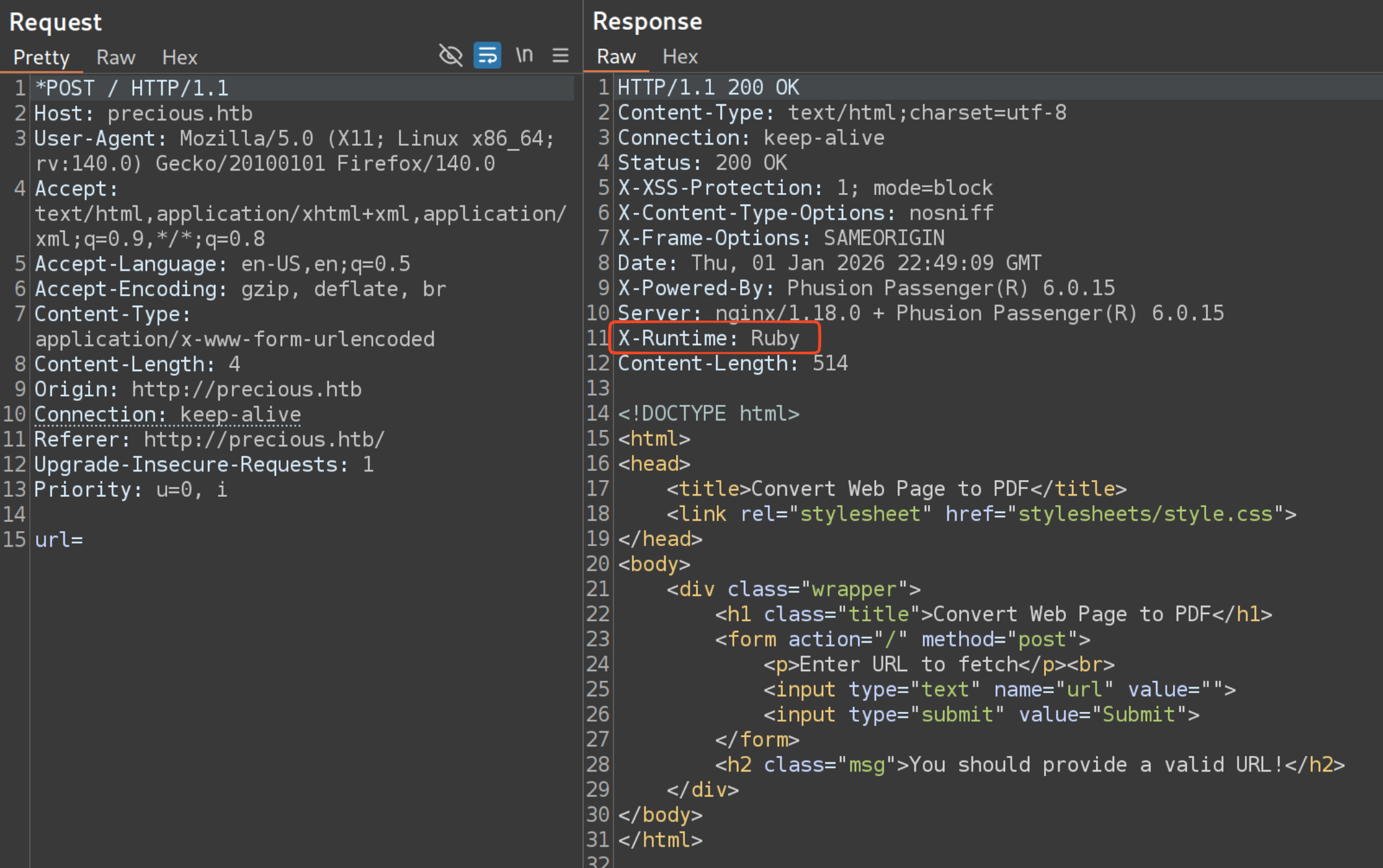
The Burp request shows that this is written using Ruby.
The FFUF scan does not show anything interesting:
Testing for command injection, we see that we have command injection.


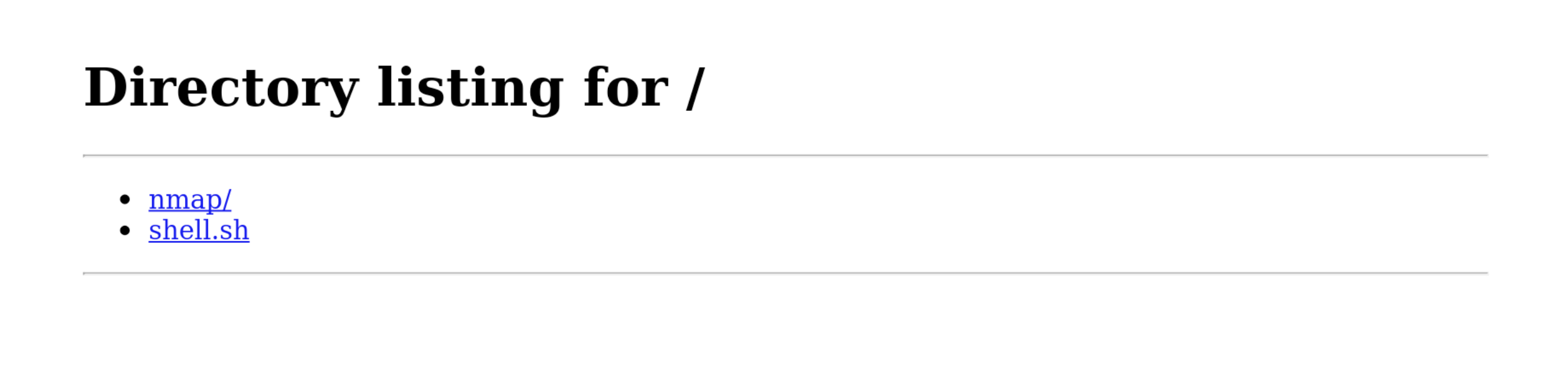
We stood up a Python HTTP server and used our machine's IP as a URL, and it downloaded a PDF on our computer.

The file just shows our directory where we stood up the Python server.
We then looked at the metadata of the file and see it was created by pdfkit v0.8.6.
Initial Foothold
Looking online about this version, we see there is a command injection vulnerability.
There is this CVE online.
Cloning the repo, we can use the exploit:
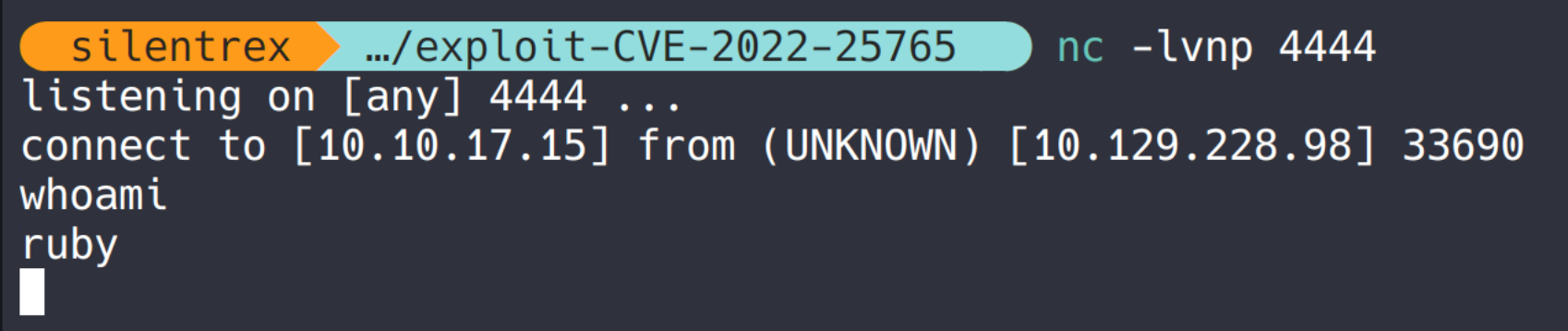
We have to start a listener:
Lateral Movement
In the home directory, we see a non-standard directory called .bundle.
In the directory, we see a config file:
This gives us what seems like henry's password.
Using the credentials above, we get a shell:
Privilege Escalation
Looking at update_dependencies.rb:
This reads from a file called dependencies.yml.
Trying to find the file:
Looking at the file:
We looked up yaml 0.1.1.
Nothing popped up, but some results did show for YAML deserialization.
The source code of update_dependencies.rb calls a dependencies.yml file, but there are no absolute paths, so it calls the dependencies.yml file in the directory we are currently in. So we can use the /tmp directory to create a dependencies.yml file and execute this.
PayloadsAllTheThings has a module on ruby deserialization on its website, which we can use.
First we have to determine the version of Ruby running on the server:
It is 2.7.4.
So we will use the 2.x-3.x payload:
This payload runs the id command.
First, we create a file named dependencies.yml in the /tmp directory:
Then we paste the payload above.
Then we run the command we got from sudo -l:
We get command execution as root.
Now we can edit the payload and add a reverse shell command so we can get a reverse shell as root.
The /tmp directory automatically clears all files periodically, so we need to create a new dependencies.yml file.
Start a listener:
We get a shell as root.